At the urging of fellow writers, I've created a blog in which writers may pose a grammar question about their writing. I do not know every grammar rule known to mankind, but with a love of grammar, Warriner's English Grammar and Composition, a B.A. in English, and 32 years in the trenches of the high school classroom, I will attempt to find the answer to your grammar question.
Total Pageviews
Saturday, March 10, 2012
Thursday, February 23, 2012
Bad Manners
Polite parents teach their young children not to interrupt conversation. When someone is excited, it's sometimes hard to follow this rule about good manners, but most people generally know interrupting others, unless it is in an emergency situation, is not good etiquette. In the world of grammar, therefore, we set off those interrupters with the use of commas.
Rule: Use commas to set off expressions that interrupt the sentence.
Appositives and appositive phrases are usually set off by commas.
An appositive is a noun or pronoun that follows another noun or a pronoun to identify or explain it. An appositive phrase consists of an appositive and its modifiers.
Examples with appositive and appositive phrases in bold:
1. We visited Boston harbor, the site of the Boston Tea Party.
2. George Washington, our first president, was a great military leader.
3. Travelers should give careful thought to footwear, the most crucial item of apparel.
4. Ms. Seagro, our French teacher, has studied at the Sorbonne.
*Note: When an appositive is so closely related to the word it modifies that it appears to be part of that word, no comma is necessary. (An appositive of this kind is called a restrictive appositive, and it is usually one word.)
Examples with restrictive appositives in bold:
1. My nephew Jim is an architect.
2. The expression c'est la vie is used occasionally in everyday English conversation.
3. The American gymnast Peter Vidmar is an Olympic Gold Medalist and one of the top 10 motivational speakers in the country.
*(Other interrupters set off by commas include words used in direct address and parenthetical expressions which I will address later.)
Appositives and appositive phrases are useful in your writing because they add important information for the readers. So, remember to please use good manners and set off appositives and appositive phrases with commas unless they are closely related to the word they further explain, and the grammar gods will smile upon you.
Don't forget National Grammar Day is on March 4th! Help us celebrate and help focus attention on speaking and writing well! More information on this and related activities can be found at http://nationalgrammarday.com/
Rule: Use commas to set off expressions that interrupt the sentence.
Appositives and appositive phrases are usually set off by commas.
An appositive is a noun or pronoun that follows another noun or a pronoun to identify or explain it. An appositive phrase consists of an appositive and its modifiers.
Examples with appositive and appositive phrases in bold:
1. We visited Boston harbor, the site of the Boston Tea Party.
2. George Washington, our first president, was a great military leader.
3. Travelers should give careful thought to footwear, the most crucial item of apparel.
4. Ms. Seagro, our French teacher, has studied at the Sorbonne.
*Note: When an appositive is so closely related to the word it modifies that it appears to be part of that word, no comma is necessary. (An appositive of this kind is called a restrictive appositive, and it is usually one word.)
Examples with restrictive appositives in bold:
1. My nephew Jim is an architect.
2. The expression c'est la vie is used occasionally in everyday English conversation.
3. The American gymnast Peter Vidmar is an Olympic Gold Medalist and one of the top 10 motivational speakers in the country.
*(Other interrupters set off by commas include words used in direct address and parenthetical expressions which I will address later.)
Appositives and appositive phrases are useful in your writing because they add important information for the readers. So, remember to please use good manners and set off appositives and appositive phrases with commas unless they are closely related to the word they further explain, and the grammar gods will smile upon you.
Don't forget National Grammar Day is on March 4th! Help us celebrate and help focus attention on speaking and writing well! More information on this and related activities can be found at http://nationalgrammarday.com/
Tuesday, November 8, 2011
Grammar Humor
*I still am using the mini-netbook instead of my bad boy desktop, so I apologize for not posting much, but keep in mind that serious work on the mini-netbook is painful. So without further ado, here's a mini-lesson on grammar from Web English Teacher on FB:
1. A comma splice walks into a bar, it has a drink and then leaves.
2. A dangling modifier walks into a bar. After finishing a drink, the bartender asks it to leave.
3. A question mark walks into a bar?
4. Two quotation marks “walk into” a bar.
5. A gerund and an infinitive walk into a bar, drinking to drink. 6. The bar was walked into by the passive voice.
7. Three intransitive verbs walk into a bar. They sit. They drink. They leave.
(With thanks to @David Harrell!)
2. A dangling modifier walks into a bar. After finishing a drink, the bartender asks it to leave.
3. A question mark walks into a bar?
4. Two quotation marks “walk into” a bar.
5. A gerund and an infinitive walk into a bar, drinking to drink. 6. The bar was walked into by the passive voice.
7. Three intransitive verbs walk into a bar. They sit. They drink. They leave.
(With thanks to @David Harrell!)
Sunday, October 9, 2011
"Dash Away, Dash Away...."
Dancer, Vixen, and Prancer may know the three simple rules for using dashes, but do you? Good writers should know when to use the dash. (For those of you who don't know, a dash on a keyboard is made by typing two hyphens next to each other!)
So, check out the following rules, and "Dash away!"
1. Use the dash to indicate an abrupt break in thought.
Examples:
The poor condition of this road -- you can feel every bump as you ride along -- makes it inconvenient for those who have no alternate route.
The real villain turns out to be -- but I don't want to spoil the ending for those of you who have not yet seen the movie.
2. Use a dash to set off parenthetical material.
Example:
Very few people in this class -- three to be exact -- have completed their projects.
3. Use a dash to mean namely, in other words, that is, and similar expressions that precede explanations.
Example:
She joined the chorus for only one reason -- she loved to sing.
*Note: The dash and colon are often interchangeable in this use covered in the last rule. A dash may be considered more emphatic than a colon.
So, my dear writers, now that you know the rules, dash to your keyboard and begin using a dash now and then in your writing.
So, check out the following rules, and "Dash away!"
1. Use the dash to indicate an abrupt break in thought.
Examples:
The poor condition of this road -- you can feel every bump as you ride along -- makes it inconvenient for those who have no alternate route.
The real villain turns out to be -- but I don't want to spoil the ending for those of you who have not yet seen the movie.
2. Use a dash to set off parenthetical material.
Example:
Very few people in this class -- three to be exact -- have completed their projects.
3. Use a dash to mean namely, in other words, that is, and similar expressions that precede explanations.
Example:
She joined the chorus for only one reason -- she loved to sing.
*Note: The dash and colon are often interchangeable in this use covered in the last rule. A dash may be considered more emphatic than a colon.
So, my dear writers, now that you know the rules, dash to your keyboard and begin using a dash now and then in your writing.
Saturday, September 24, 2011
IM Disease
IM Disease, a deadly virus, first surfaced a a decade and a half ago, attacking people of all ages and all walks in life, and has since spread to all parts of the world. Showing up with the advent of ICQ, Yahoo Messenger, etc., Instant Message Disease causes patients to soon lose the ability to punctuate, capitalize, and spell as they use the computer to communicate. IM Disease is resistant to many medications, and continues to spread, particularly throughout the teenage population, as they now spend inordinate amounts of time texting on their cell phones.
Treatment involves practice writing papers for classes and conscious thought. Attention to detail is vital for a full recovery, so following are some grammar rules for capitalization:
1. Capitalize a title belonging to a particular person if it precedes the person's name. If a title stands alone or follows a person's name, capitalize it only if it refers to a high official or to someone to whom you wish to show special respect.
Examples:
Coach Matta; Thad Matta, basketball coach; the coach; a coach
Admiral Watkins; Admiral James D. Watkins, Chief of Naval Operations; an admiral
the Speaker of the House; the Director of the Federal Bureau of Investigation; the Prince of Wales; the Attorney General; the Mayor of New York
*Some titles are capitalized if they refer to a particular person or are used in place of a person's name. This if often true when titles are used in sentence of direct address.
Examples:
The Governor signed the bill.
A governor is an elected official.
Are you retiring at the end of this term, Professor?
A new professor will be appointed in his place.
*The word president is always capitalized when it refers to the head of a nation; the compound word vice-president is capitalized (with two capital letters) when it refers to the Vice-President of a nation.
*Do not capitalize ex -, -elect, former, or late when they are used with a title: ex-Governor Welsh, the President-elect, former Congressman Hill, the late Senator Humphrey
*The rules governing titles of honor or position also apply, in general, to words indicating family relationships, such as mother, father, grandmother, sister, brother, aunt. Such words are capitalized whey they precede a name: Uncle Ed, Cousin Amy. They may be capitalized when they are used in place of a person's name, especially in direct address: "Did you play tennis today, Mother?" When used alone, they are usually not capitalized: Margo has one sister and two brothers.
*Do not capitalize a word indicating relationship when it follows a possessive noun or pronoun unless it is considered a part of the name: Mrs. Graham's son, my sister Sally, but my Aunt Catherine.
2. Capitalize the first word, the last word, and all important words in the titles of books, magazines, newspapers, articles, historical documents, laws, works of art, movies, and television programs.
Examples:
The Catcher in the Rye
Time
the Tribune
"Interview with the President"
the Declaration of Independence
National War Powers Act
Kennedy-Ives Bill
Twenty-fifth Amendment
Star Wars
"Sesame Street"
Please continue to communicate with your friends and family via an instant messenger, but remember, you need to know the differences in language and when to use which form. An essay on a college application or a business communication with another company is not the time to flaunt IM Disease and use Non-Standard English that you probably use with instant messages to your bestie.
Happy Writing!
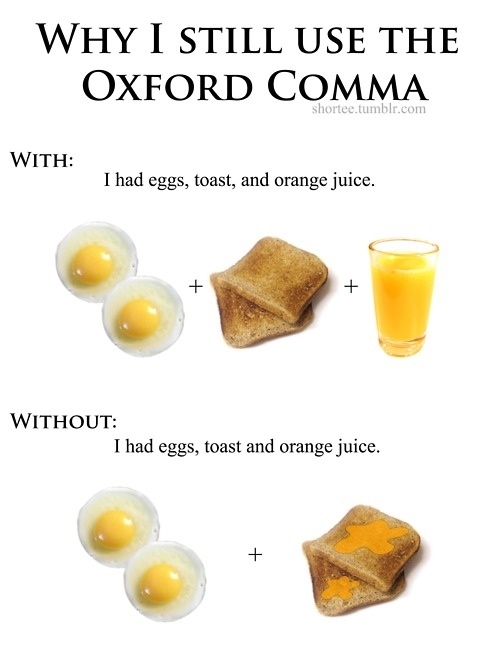
Treatment involves practice writing papers for classes and conscious thought. Attention to detail is vital for a full recovery, so following are some grammar rules for capitalization:
1. Capitalize a title belonging to a particular person if it precedes the person's name. If a title stands alone or follows a person's name, capitalize it only if it refers to a high official or to someone to whom you wish to show special respect.
Examples:
Coach Matta; Thad Matta, basketball coach; the coach; a coach
Admiral Watkins; Admiral James D. Watkins, Chief of Naval Operations; an admiral
the Speaker of the House; the Director of the Federal Bureau of Investigation; the Prince of Wales; the Attorney General; the Mayor of New York
*Some titles are capitalized if they refer to a particular person or are used in place of a person's name. This if often true when titles are used in sentence of direct address.
Examples:
The Governor signed the bill.
A governor is an elected official.
Are you retiring at the end of this term, Professor?
A new professor will be appointed in his place.
*The word president is always capitalized when it refers to the head of a nation; the compound word vice-president is capitalized (with two capital letters) when it refers to the Vice-President of a nation.
*Do not capitalize ex -, -elect, former, or late when they are used with a title: ex-Governor Welsh, the President-elect, former Congressman Hill, the late Senator Humphrey
*The rules governing titles of honor or position also apply, in general, to words indicating family relationships, such as mother, father, grandmother, sister, brother, aunt. Such words are capitalized whey they precede a name: Uncle Ed, Cousin Amy. They may be capitalized when they are used in place of a person's name, especially in direct address: "Did you play tennis today, Mother?" When used alone, they are usually not capitalized: Margo has one sister and two brothers.
*Do not capitalize a word indicating relationship when it follows a possessive noun or pronoun unless it is considered a part of the name: Mrs. Graham's son, my sister Sally, but my Aunt Catherine.
2. Capitalize the first word, the last word, and all important words in the titles of books, magazines, newspapers, articles, historical documents, laws, works of art, movies, and television programs.
Examples:
The Catcher in the Rye
Time
the Tribune
"Interview with the President"
the Declaration of Independence
National War Powers Act
Kennedy-Ives Bill
Twenty-fifth Amendment
Star Wars
"Sesame Street"
Please continue to communicate with your friends and family via an instant messenger, but remember, you need to know the differences in language and when to use which form. An essay on a college application or a business communication with another company is not the time to flaunt IM Disease and use Non-Standard English that you probably use with instant messages to your bestie.
Happy Writing!
Friday, September 16, 2011
Road Trip
I posted today's grammar rule in my personal blog which can be viewed here: http://aprilbaby10.blogspot.com/2011/09/road-rage.html
Thursday, September 1, 2011
Variety Is the Spice of Life!
As the old adage goes, "Variety is the spice of life." So, need a little oregano or thyme, or maybe cinnamon to spice up your writing? What about paprika? The perfect spice to enliven your writing, of course, is to use a variety of sentence structures.
Notice in the following paragraph that the writer has used a variety of sentence structures to add vitality to his writing.
(Reminder: S = Simple Sentence (one independent clause)
CD = Compound Sentence (two or more independent clauses)
CX = Complex Sentence (one independent clause + any number of subordinate clauses)
CD-CX = Compound-Complex Sentence (two or more independent clauses + any number of subordinate clauses)
George Willard, the Ohio village boy, was fast growing into manhood and new thoughts had been coming into his mind. (CD) All that day, amid the jam of people at the Fair, he had gone about feeling lonely. (S) He was about to leave Winesburg to go away to some city where he hoped to get work on a city newspaper and he felt grown-up. (CD-CX) The mood that had taken possession of him was a thing known to men and unknown to boys. (CX) He felt old and a little tired. (S) Memories awoke in him. (S) To his mind his new sense of maturity set him apart, made of him a half-tragic figure. (S) He wanted someone to understand the feeling that had taken possession of him after his mother's death. (CX)
~Sherwood Anderson
When we first begin to write, we use simple sentences: Next week we will stay after school. The rehearsals for the spring play begin. Maybe I will have a part in it.
However, as we grow older and more mature in our thinking, we write more complicated sentences, in order to express our thoughts more effectively. One sign of maturity in writing is the use of subordination, which will help you to write sentences that have greater clarity, smoothness, and force.
So spice up your writing with more than a dash of sentence variety, and mix together simple, compound, complex, and compound-complex sentences to create the perfect piece.
Notice in the following paragraph that the writer has used a variety of sentence structures to add vitality to his writing.
(Reminder: S = Simple Sentence (one independent clause)
CD = Compound Sentence (two or more independent clauses)
CX = Complex Sentence (one independent clause + any number of subordinate clauses)
CD-CX = Compound-Complex Sentence (two or more independent clauses + any number of subordinate clauses)
George Willard, the Ohio village boy, was fast growing into manhood and new thoughts had been coming into his mind. (CD) All that day, amid the jam of people at the Fair, he had gone about feeling lonely. (S) He was about to leave Winesburg to go away to some city where he hoped to get work on a city newspaper and he felt grown-up. (CD-CX) The mood that had taken possession of him was a thing known to men and unknown to boys. (CX) He felt old and a little tired. (S) Memories awoke in him. (S) To his mind his new sense of maturity set him apart, made of him a half-tragic figure. (S) He wanted someone to understand the feeling that had taken possession of him after his mother's death. (CX)
~Sherwood Anderson
When we first begin to write, we use simple sentences: Next week we will stay after school. The rehearsals for the spring play begin. Maybe I will have a part in it.
However, as we grow older and more mature in our thinking, we write more complicated sentences, in order to express our thoughts more effectively. One sign of maturity in writing is the use of subordination, which will help you to write sentences that have greater clarity, smoothness, and force.
So spice up your writing with more than a dash of sentence variety, and mix together simple, compound, complex, and compound-complex sentences to create the perfect piece.
Subscribe to:
Posts (Atom)
